Please refer to Billing cycle for more details
This screen lists all billing cycles that can be used as Cycle run:

From there you can view and edit a cyclic run definition:
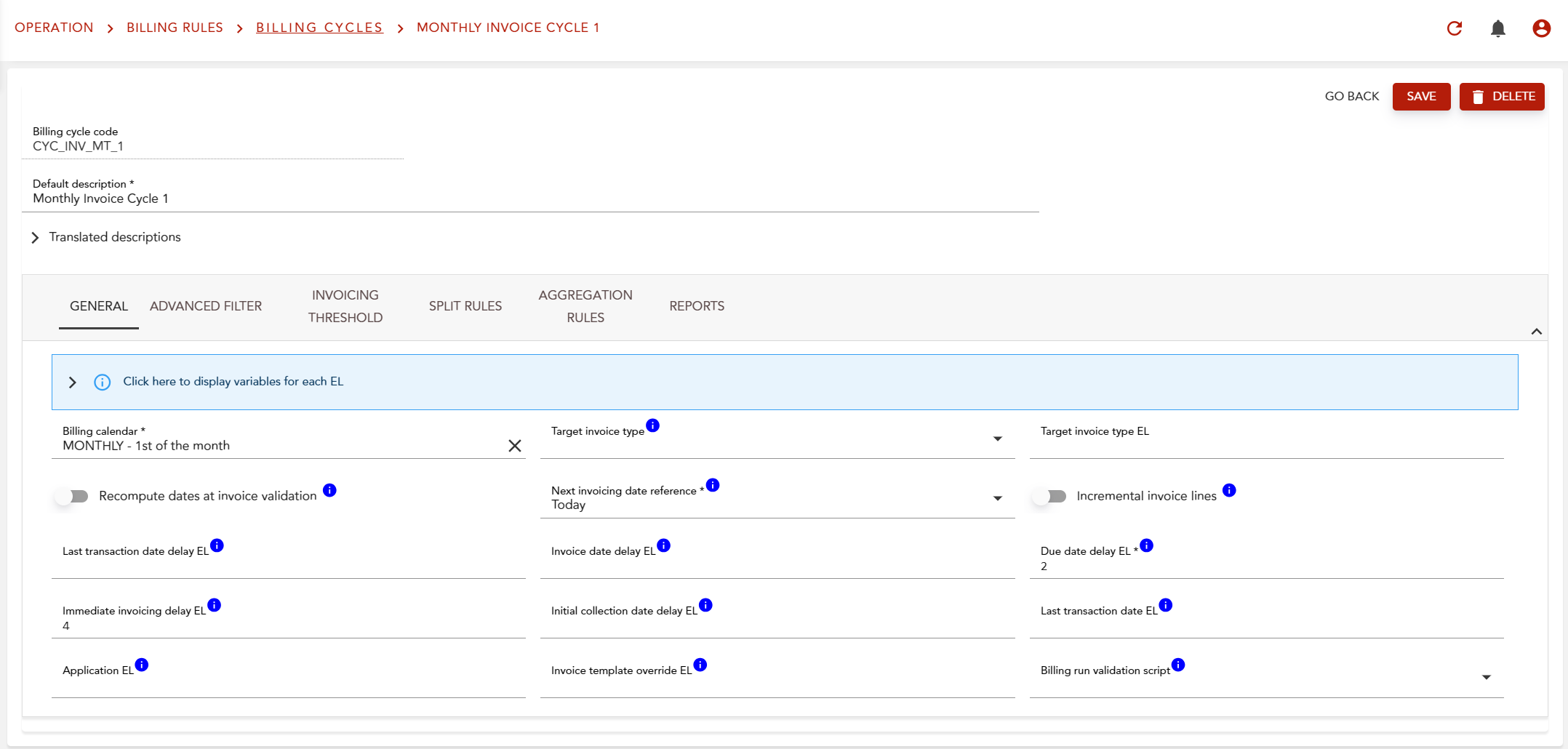
This includes:
-
General:
-
Advanced filter
-
Invoicing threshold & minimum
-
Split rules
-
Aggregation rules
-
Reports
General
The general section defines what elements to use to take into account in the bill run, which template to use…
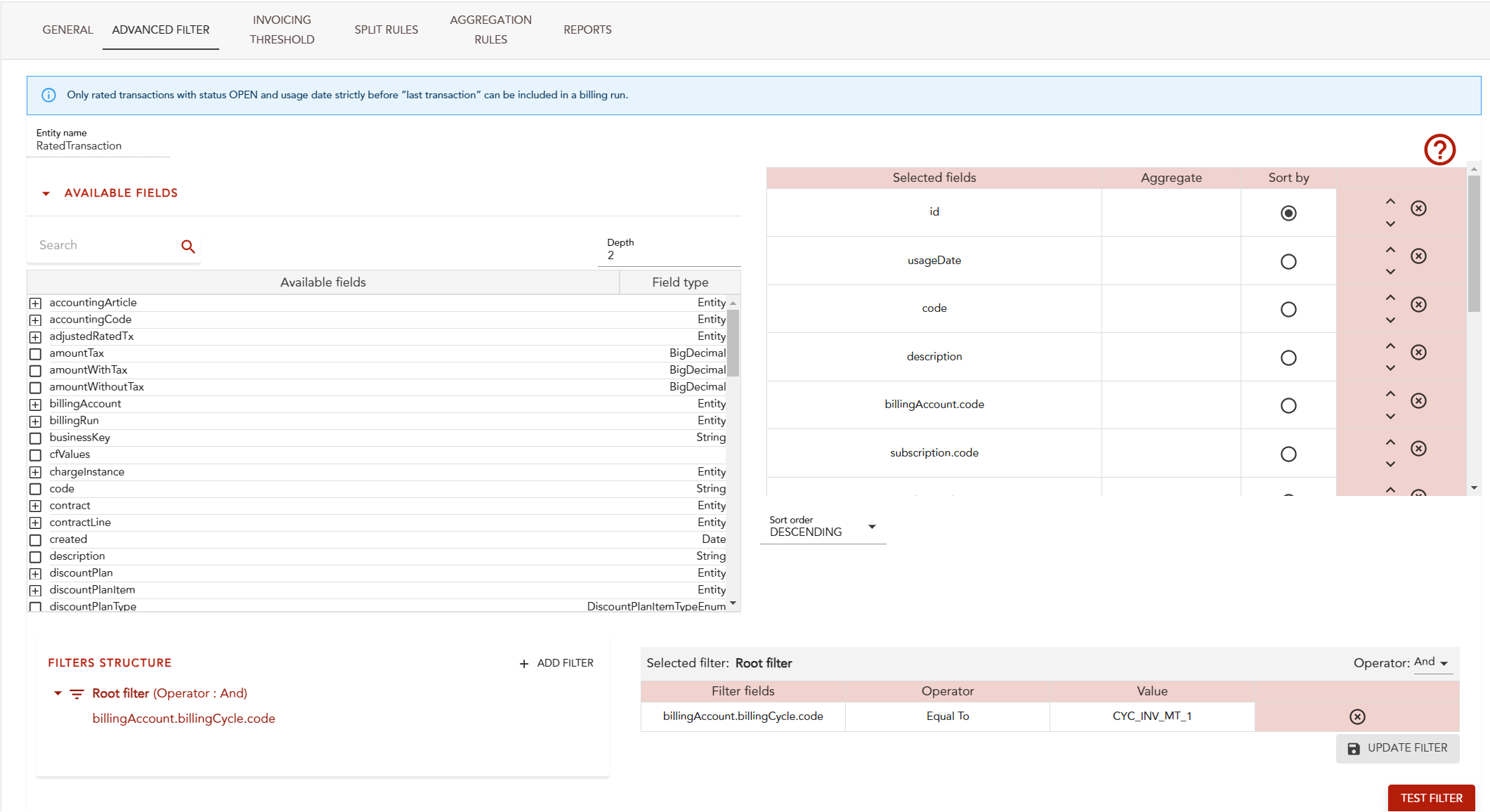
Advanced filter
The advanced filter can be used to test sorting values for a billing run. As it is possible to have juste the filter to define the bill cycle, this screen will guide you in its definition.
Invoicing threshold & minimum
The invoicing thresold defined when to generate the invoice based on amount or not.

From 18.1.0 onwards, this tab also holds three switches, all off by default:
-
Enable adding invoice minimum: when an invoice is below the minimum amount set for the customer or in the catalog, an additional invoice line is added to reach that amount.
-
Enable checking invoicing threshold: an invoice whose amount is below the invoicing threshold is not generated, and its rated items stay available for the next invoice. The threshold is checked only when this switch is on.
-
Check threshold before adding minimum: by default, the minimum line is added before the threshold is checked. Turn this switch on to check the threshold first.
Billing runs created from the billing cycle in the Portal or through the API take these settings.
Split rules
The split rules can be sued to use a custom script to ventilate the lines to different accounts (based on Billing account, Order or subscription)

Aggregation rules
The aggregation rules permits to define how to aggregate Rated Transaction to generate an Invoice Line. This is used by the progressive invoice line generation.
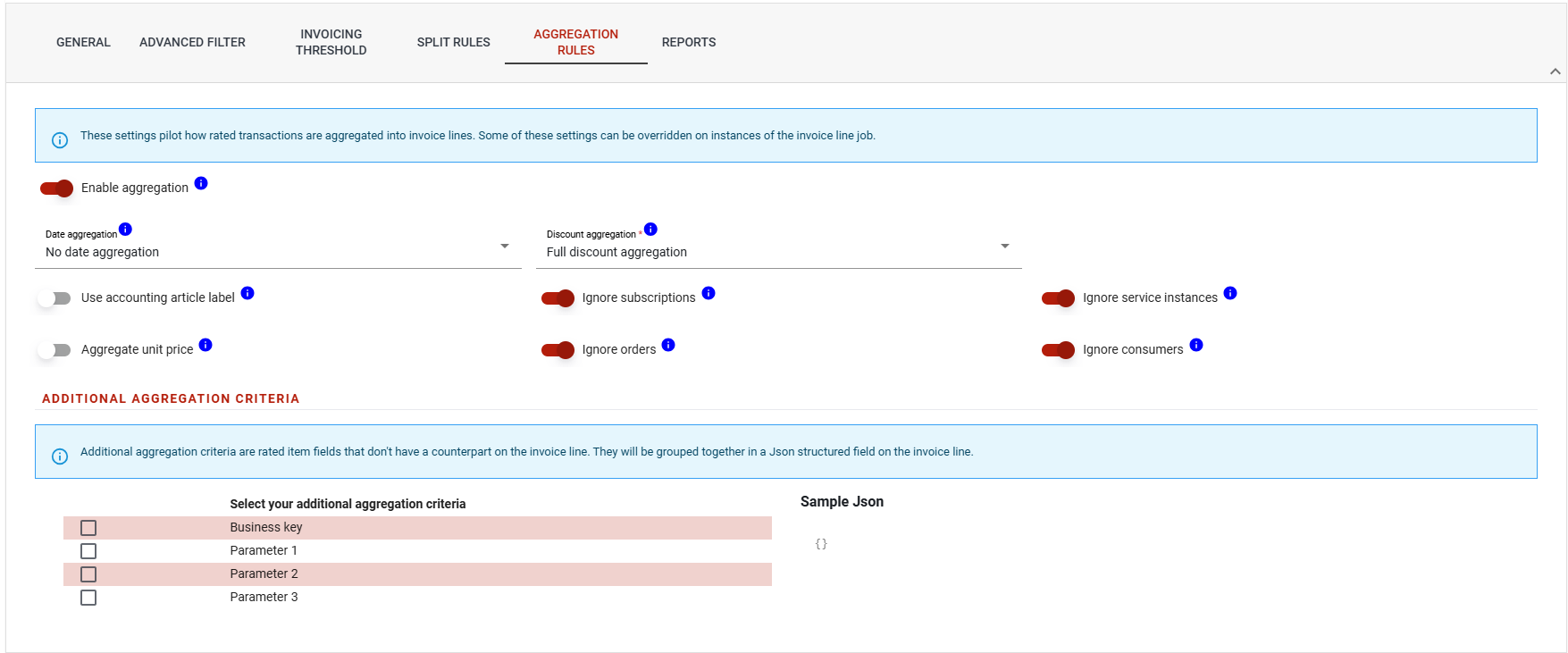
From 18.1.0 onwards, when you create a billing cycle, Discount aggregation is set to No discount aggregation by default. Keep this value if you issue electronic invoices.
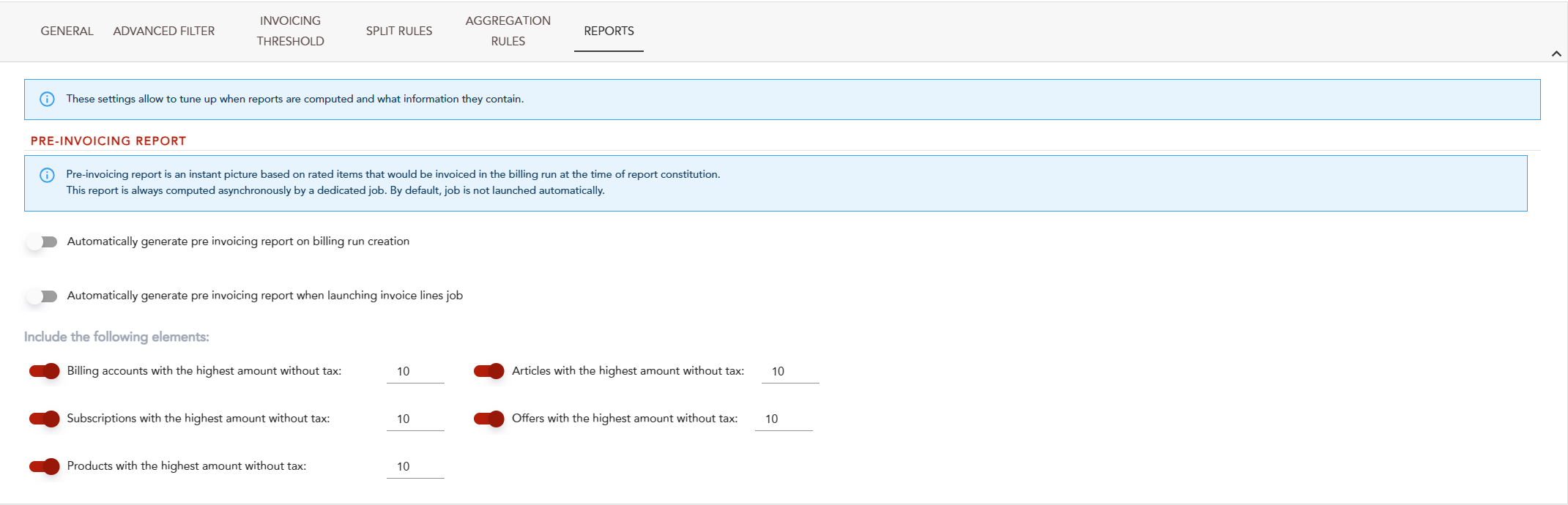
Reports
This screen permits to define and adapt the pre-invoicing report that is displayed when starting the bill cycle.