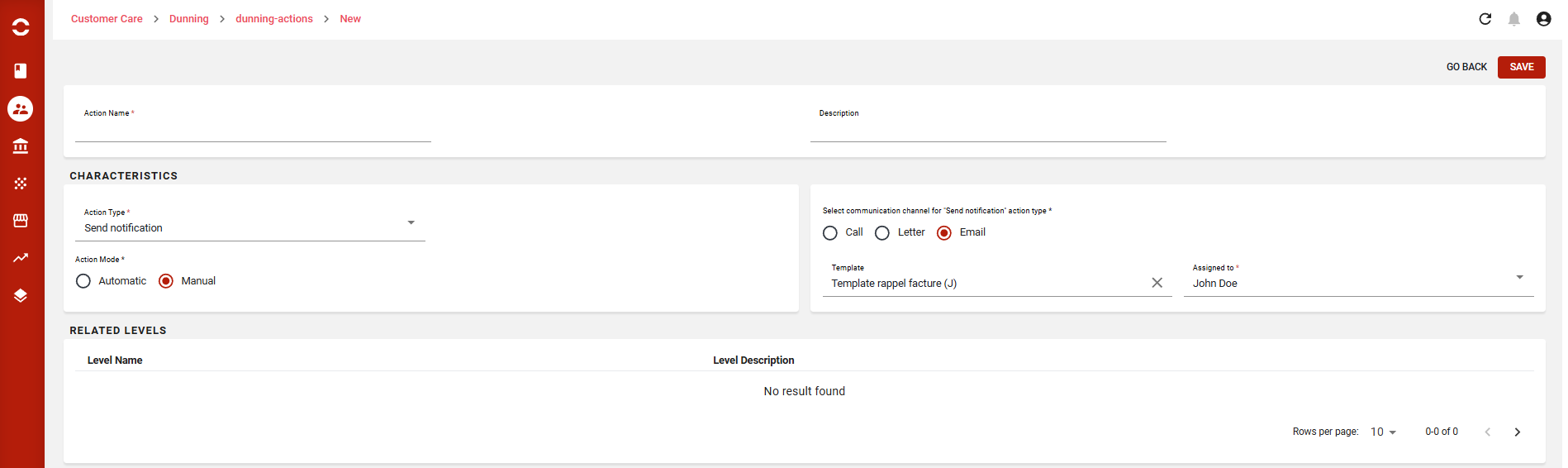
The second step in configuring a dunning policy is defining the actions in the dunning workflow. These actions, whether based on existing templates or not, will be executed at a specified execution level date within the policy.
Concept
Now that you have defined the general settings for the Dunning feature, let’s start by defining the templates that you will use for some specific actions (that you will define just after).
Before starting, let’s quuickly resume the way a Dunning policy works in Opencell :
A dunning policy is an object that has several levels. Each level has one or several actions linked to it. Some actions can be automatic or manual, and for some action types, a template will be used to automate the flow.
All these different notions are objects in Opencell, and the way to create a dunning policy is to start from the most granular object, and work your way up to the actual Dunning policy.
This is best represented below:

Templates, actions, levels and policies are all independent objects linked to one another.
Accessing Dunning Actions in Opencell
In Opencell, you can manage Dunning Actions within the Customer Care module.
How to Navigate to Dunning Actions
-
Log in to your Opencell environment.
-
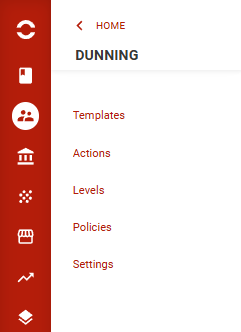
Go to Customer Care → Configuration → Dunning → Actions .
The Dunning menu follows the logical order of configuration steps required to implement dunning policies. All dunning-related submenus are accessible under the Customer Care module.
Dunning Actions Overview
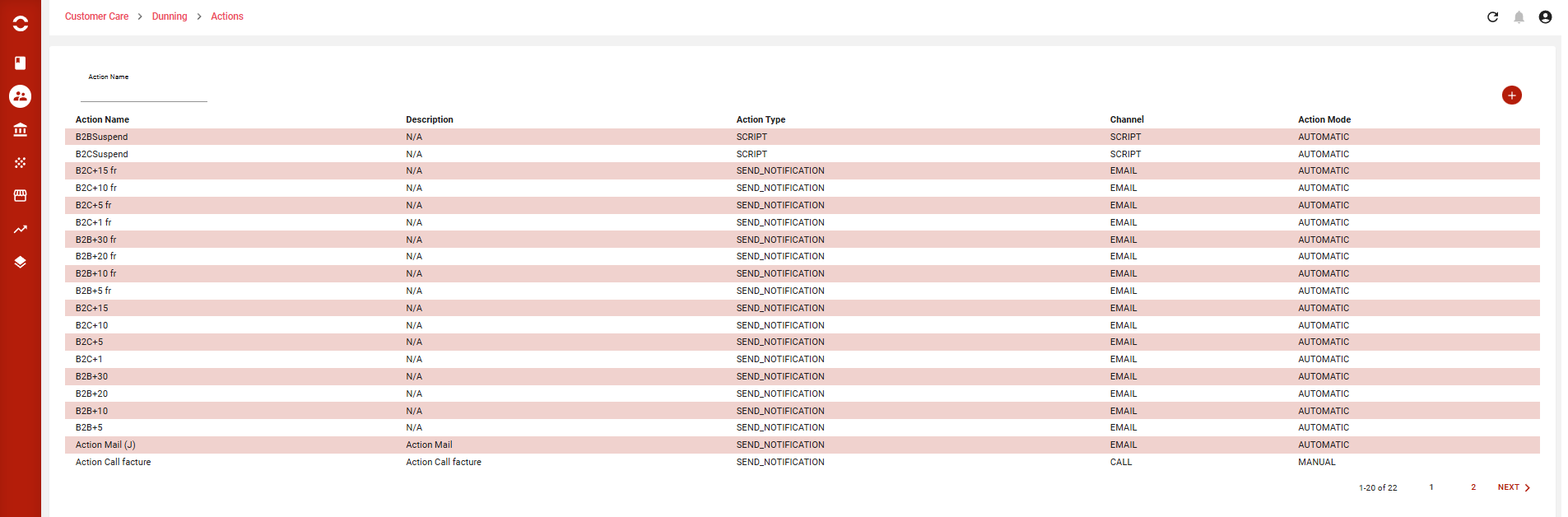
Upon accessing the Dunning Actions page, you will find:
-
Predefined Actions that can be used as they are, modified, or deleted based on your needs.
-
A search bar to quickly find actions by name.
Creating a Dunning Actions in Opencell
You can create your own Dunning Actions from the Actions List View by clicking the “+” button in the top-right corner of the page.
-
Accessing the Actions Creation Page
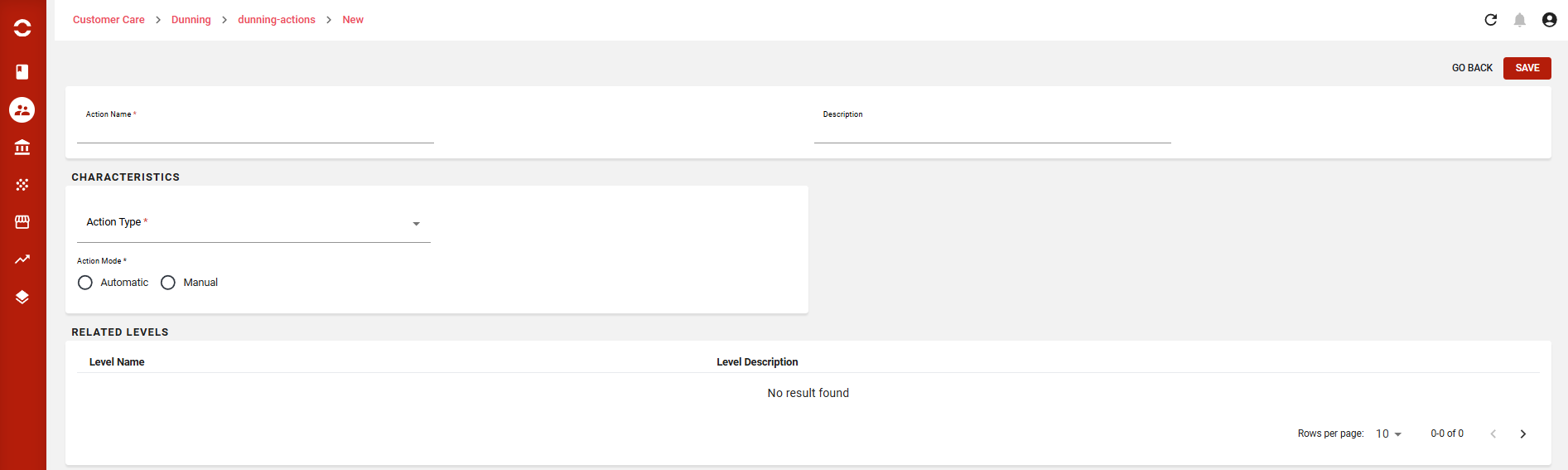
Once you click “+”, you will be redirected to the action creation page:
-
Configuring Your action details
On this page, you can define key action settings, including:
-
Action Name → Assign a name for easy identification.
-
Action Description→ Assign a description for easy identification.
-
Action Type → Specifies the type of action : Retry payment , Script, Send notification
-
Action Mode→ Determines the execution mode: automatic or manual
1. Configuring every type specifications
-
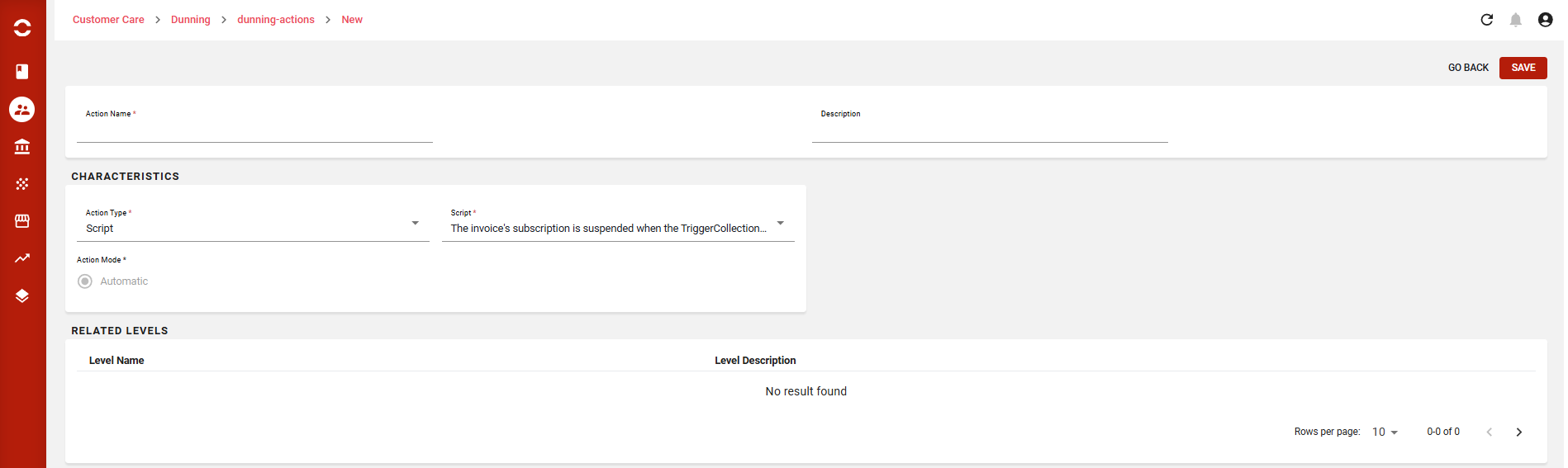
For the script action we must choose a dunning script which must be developed before policy configuration. as explained in the dunning concept part.
-
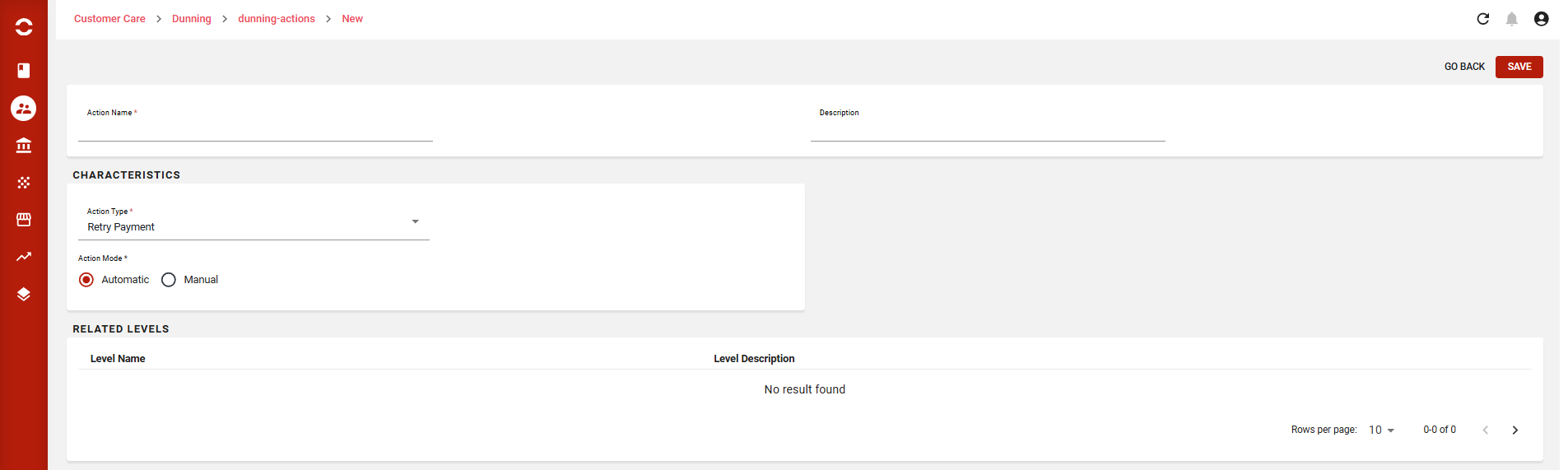
The retry payment doesn’t need any configuration
-
The send notification have multiples details:
-
email, letter or call as notification channel
-
template for email and letter as definied in the dunning tempaltes
-
Assigned user for manual action, we use a dummy user as explaine on concept part.
-